

For technical teams, Q1 isn’t just another planning cycle. It’s where the year either stabilizes or starts to break down. Decisions made in January quietly dictate delivery speed, team morale, and roadmap credibility for months to come.
Yet many teams rush project planning, relying on last year’s assumptions and optimistic timelines.
This guide is built for engineering leaders, product managers, and technical teams planning Q1 in 2026. It breaks down how to plan with clarity, manage constraints realistically, and turn strategy into execution without bloated roadmaps or endless meetings.

Why Q1 Planning Is Critical for Technical Teams in 2026
Q1 planning sets the operational baseline for the entire year. It’s where high-level strategy collides with real-world constraints like team capacity, technical debt, and shifting priorities.
In 2026, technical teams face even more pressure: faster release cycles, AI-driven tooling, tighter budgets, and higher expectations for predictability. Weak kickoff planning doesn’t just slow teams down, it creates confusion that compounds every quarter.
A strong Q1 kickoff helps teams:
- Align engineering and product priorities early
- Reduce rework and context switching
- Make tradeoffs explicit instead of reactive
- Build momentum that carries into Q2 and beyond
If Q1 lacks clarity, the rest of the year becomes damage control.

Step 1: Define Q1 Outcomes Before You Plan Any Work
Before roadmaps, sprints, or backlogs, technical teams need to agree on what success actually looks like by the end of Q1. This step is often skipped, and it’s the root of most planning failures.
Outcomes force teams to think beyond activity and focus on impact.
What Strong Q1 Outcomes Look Like
Strong Q1 outcomes clearly describe what needs to be achieved by the end of the quarter. They help teams focus on results instead of just staying busy.
Good Q1 outcomes are:
- Clear and specific, so everyone understands what success looks like
- Bound to the quarter, with a clear finish by the end of March
- Focused on results, not a long list of tasks or tickets
- Limited in number, so teams aren’t pulled in too many directions
Too many priorities create confusion. If everything is treated as urgent, teams struggle to make real progress.
Align Outcomes With Real Business and Technical Needs
Q1 outcomes should support what the business and the technology actually need. Not just what sounds good on a roadmap.
Well-aligned outcomes usually connect to:
- Business growth or revenue goals
- System stability and performance
- Reducing risk, such as security or reliability issues
- Long-term technical direction
When outcomes aren’t clear or aligned, teams often end up shipping work without a strong sense of why it matters.
Read More: Practical OKR Guide for Teams: What Are OKRs and How Do They Work?
Step 2: Audit Team Capacity and Constraints Honestly
Before locking in Q1 plans, teams need a realistic picture of how much work they can actually take on. Planning based on best-case scenarios almost always leads to missed deadlines and frustrated teams.
This step is about being honest, not optimistic, about what’s possible.
Read More: Team Workload Management: How to Balance Capacity and Prevent Burnout
Capacity Isn’t Just Headcount
Team capacity is more than how many people you have. It’s shaped by everything that pulls attention away from planned work.
When estimating Q1 capacity, consider:
- Time off, holidays, and planned leave
- On-call duties and unexpected incidents
- New hires who need ramp-up time
- Ongoing maintenance and support work
- Dependencies on other teams
If your plan assumes everyone is fully available all the time, it’s not realistic.
Account for Technical Debt Early
Q1 is a bad time to ignore technical debt and hope it won’t matter. Unaddressed debt slows down new work and creates delays later in the quarter.
Ask yourself:
- What existing issues will block or slow delivery this year?
- What needs attention early to keep work moving smoothly?
- What can safely wait until later?
Planning for technical debt upfront helps teams avoid surprises halfway through the quarter.
Step 3: Set Clear Q1 Priorities and Make Tradeoffs Visible
Every Q1 plan needs clear priorities. When priorities aren’t defined, teams spend time debating what to work on instead of making progress, especially when new requests show up.
This is where clear decisions matter more than ambitious plans.
Use a Simple Priority Framework
A simple way to structure Q1 work:
- Must-have: Work that Q1 can’t succeed without
- Should-have: Important work, but flexible if needed
- Nice-to-have: Only done if time and capacity allow
This makes it easier to adapt when plans change.
Make Tradeoffs Explicit, Not Implied
When something new is added during the quarter, teams should clearly understand:
- What work is being delayed
- What is being removed from scope
- Where capacity is being shifted
When tradeoffs aren’t clear, teams quietly take on more work, and deadlines slip as a result. This is why it's important to establish effective task management systems.
Step 4: Translate Goals Into Executable Technical Plans
Once priorities are clear, teams must break them down into work that can actually be delivered. This step bridges strategy and execution, and it’s where many plans fall apart.
Break Work Down Without Overengineering
For each major initiative:
- Define clear ownership
- Establish success criteria
- Identify dependencies early
- Sequence work logically
Avoid turning Q1 planning into a fully locked execution script. Plans should guide teams, not trap them with rigid expectations.
Build in Early Validation Points
High-risk or complex initiatives need early checkpoints:
- Proofs of concept
- Architecture reviews
- Performance benchmarks
Early validation reduces late surprises.
Step 5: Align Engineering, Product, and Stakeholders Early
Misalignment rarely shows up in kickoff meetings. It surfaces weeks later as scope creep, missed expectations, or friction between teams. Q1 alignment should happen before work starts.
What Alignment Actually Requires
Alignment isn’t about agreement on everything. It’s about shared understanding of:
- What’s in scope and what isn’t
- Quality and delivery expectations
- Decision-making authority
- What happens when plans change
If these aren’t clear, teams rely on meetings to fill the gaps.
Reduce Dependency on Status Meetings
Good alignment creates visibility that reduces the need for constant check-ins. When teams can see priorities and progress clearly, execution speeds up.
Read More: How Tech Leads Can Improve Sprint Visibility Without Micromanaging

Step 6: Plan Q1 Reviews Around Outcomes, Not Output
Q1 shouldn’t feel like a three-month tunnel with no checkpoints. Teams need regular moments to assess whether they’re still on track to deliver outcomes, not just ship tickets.
Build Outcome-Focused Reviews
Effective Q1 reviews answer:
- Are we moving toward our stated outcomes?
- What assumptions have changed?
- What needs to be adjusted now?
Velocity alone is a weak signal. Outcomes matter more. It's important to focus on achieving your team's goals instead of trying to finish everything on planned timelines.
Normalize Adjustments, Not Course Corrections
Changing the scope of your project is not a failure; it’s responsiveness. Planning for adjustment upfront makes teams more resilient when reality shifts. Teams need to be flexible to adapt to sudden changes in plans and priorities.
Step 7: Keep Q1 Documentation Lean and Actionable
Technical teams don’t need more documents. They need information that’s easy to find and actually helps them do their work.
Q1 kickoff documentation should be:
- Short and to the point
- Easy to update as plans change
- Simple to navigate and understand
The goal is clarity, not completeness.
What Q1 Documentation Should Cover
At a minimum, your Q1 documentation should clearly outline:
- The main goals for the quarter
- The key initiatives and who owns them
- How work is prioritized
- Any known risks or limitations
If someone new can’t understand what the team is focused on within 10 minutes, the documentation is doing more harm than good.
Read More: The Future of Project Documentation: AI Summaries, Threads & Auto-Context

Common Q1 Project Planning Mistakes Technical Teams Make
Even experienced teams fall into the same Q1 planning traps year after year. These issues often don’t show up right away, but they quietly undermine execution as the quarter unfolds.
Watch out for:
- Treating the roadmap as a fixed promise, instead of a plan that needs room to adapt
- Overloading Q1 in an attempt to “get ahead,” which usually leads to burnout and unfinished work
- Ignoring real capacity limits, assuming teams can absorb more than they actually can
- Relying on meetings to create alignment, rather than building shared visibility into plans and progress
- Hiding uncertainty or risk, instead of acknowledging it early and planning around it
These mistakes don’t just slow teams down. Over time, they damage trust—between teams, leaders, and stakeholders—and make future planning harder, not easier.
How Leiga Helps Technical Teams Execute Q1 Plans More Effectively
Q1 plans often fail not because teams lack effort, but because planning information is scattered across tools, documents, and disconnected conversations. Roadmaps live in one place, execution happens somewhere else, and context gets lost in between.
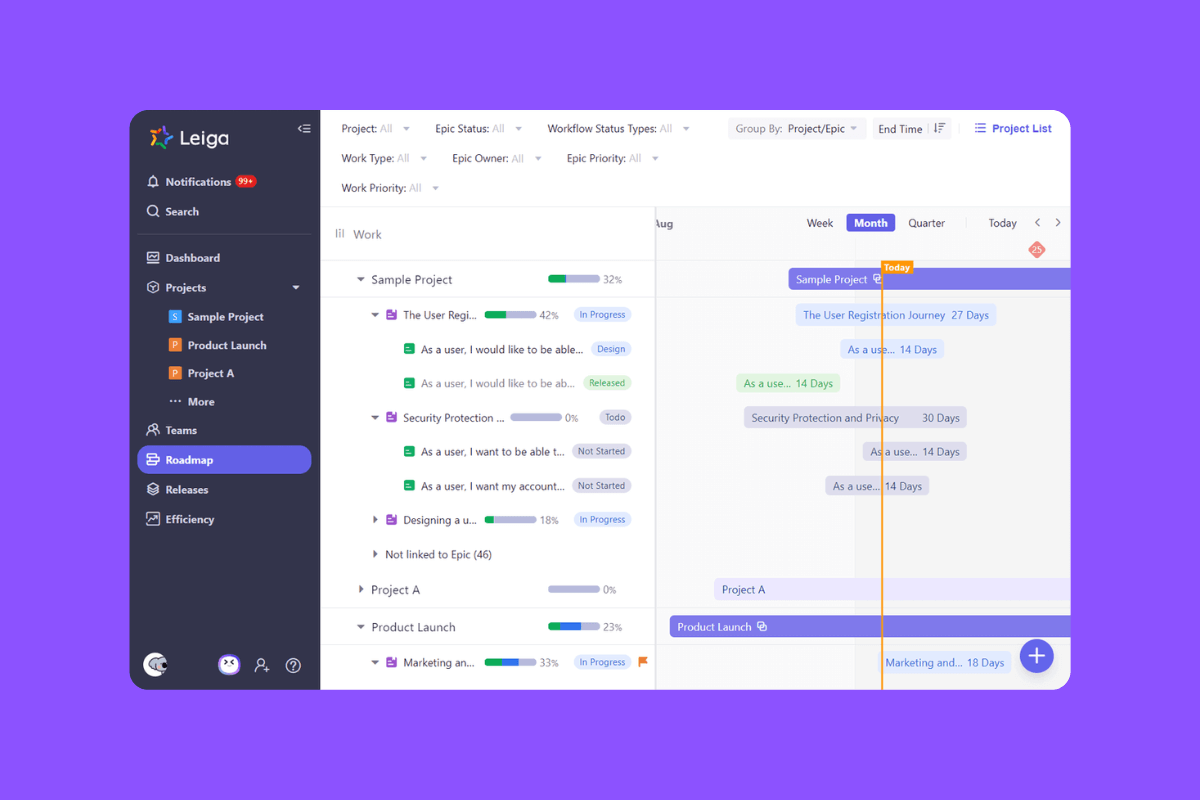
Leiga closes that gap by bringing planning, execution, and visibility into a single shared workspace built specifically for technical teams.
Leiga helps teams move from high-level Q1 goals to day-to-day execution without losing alignment. Instead of treating planning as a one-time kickoff activity, Leiga keeps Q1 plans alive as work progresses so priorities, tradeoffs, and decisions stay visible to everyone involved.
With Leiga, technical teams can:
- Connect Q1 outcomes directly to initiatives and tasks, ensuring daily work always maps back to quarterly goals
- Align roadmaps, boards, and execution in real time, so plans stay accurate as priorities shift
- Make tradeoffs explicit and visible, reducing last-minute surprises and reactive rework
- Replace status meetings with shared visibility, giving leaders and teams clarity without micromanagement
- Keep documentation living and current, so context doesn’t disappear after the kickoff meeting
By centralizing planning and execution, Leiga helps teams spend less time managing tools and updates and more time shipping meaningful work that actually moves Q1 outcomes forward.
Final Thoughts: Strong Q1 Planning Creates a Strong 2026
Q1 isn’t about predicting the entire year, it’s about setting direction, constraints, and clarity early enough to adapt intelligently.
Technical teams that plan Q1 well:
- Move faster without burning out
- Make better decisions under pressure
- Maintain trust with stakeholders
- Carry momentum into every quarter that follows
Start Q1 with clarity, not chaos. Try Leiga for free and see how technical teams plan, align, and execute better from day one.
- Streamline Your Workflow with Leiga
- Effortlessly automate tasks
- Boost productivity with AI insights
- Free forever — elevate project management
