

For modern teams, productivity is not merely an option anymore. It’s the absolute cornerstone of success. In digital environments, teams are expected to deliver more, faster, and with fewer resources. But real productivity is not about pushing people to work longer hours or multitask endlessly.
True productivity is about clarity, focus, and having smart systems. It’s about removing friction, reducing wasted effort, and helping teams spend time on work that actually matters.
In this guide, we break down what productivity really means, why measuring it matters, how to calculate it effectively, and how AI project management tools like Leiga can help teams work smarter, not harder.

What Is Productivity (and Why It Matters So Much)?
At its core, productivity measures how efficiently work gets done. It looks at the relationship between input (time, effort, resources) and output (completed tasks, delivered features, business value).
When productivity is high:
- Teams deliver faster
- Work quality improves
- Stress and burnout decrease
- Businesses scale more easily
When productivity is low:
- Deadlines slip
- Teams feel overwhelmed
- Managers rely on guesswork
- Costs increase without better results
That’s why productivity isn’t just an operational concern, it’s a strategic one.
Why Does Calculating Productivity Matter?
You can’t improve what you don’t measure. Without clear productivity data, teams tend to rely on assumptions, gut feelings, and surface-level signals like assuming that everyone is busy.
Calculating productivity helps organizations:
- Understand how work actually flows
- Identify bottlenecks and slowdowns
- Spot overloaded or underutilized team members
- Make informed decisions instead of reactive ones
It also creates transparency. Accountability naturally improves without micromanagement when teams can see how their work moves from idea to delivery.
The Shift to Data-Driven Productivity
In the past, productivity was hard to measure accurately. Today, data-driven tools make it much easier.
Modern platforms can break productivity down by:
- Project
- Work type
- Time period
- Team or individual capacity
This organization-wide view makes it possible to continuously improve processes instead of reacting only when something goes wrong.
Read More: Smarter Project Reports with AI: Turning Every Update into Actionable Insight

How to Calculate Productivity
Undoubtedly, achieving optimal productivity in project management necessitates scientific measures. Several methods are at our disposal, providing comprehensive, precise, and multilayered productivity evaluations.
1. Partial Factor Productivity and Multifactor Productivity
These methods are traditionally used as tools for productivity assessment. The former considers output relative to a single input, such as labor or capital, thereby providing insight into the efficiency of specific factors. In contrast, the latter compares the output to the combination of inputs, offering an overview of overall productivity performance.
2. Key Performance Indicators (KPIs)
KPIs serve as essential gauges of progress towards set objectives. Regular monitoring of KPIs allows immediate response and adaptations, thereby ensuring consistent progress towards outlined goals.
3. Value-Added Approach
Value-added approach emphasizes the significance of each task's contribution to the overall project. By deciphering the value each task generates, resource allocation efficiency and productivity management can be enhanced substantially.
4. Econometric Models
Though complex, the Econometric method, which employs advanced statistics to measure productivity, allows for a detailed analysis of productivity parameters. This multivariate approach provides valuable, nuanced insights into productivity performance and areas for improvement.
5. Machine Learning-Based Productivity Models
Machine Learning-based productivity prediction models, being pioneering strategies, efficiently utilize past data to predict future productivity trends. Such forward-thinking, data-driven models facilitate strategic planning and decision-making.
A judicious blend of these methods can balance both quantitative and qualitative productivity measures. This hybrid approach provides a holistic view of productivity, empowering effective evaluation in varying project scenarios. The choice of method should cater to the project’s specific needs and context. Remember, there is no one-size-fits-all approach to productivity assessment.

Why Traditional Tools Limit Productivity
Many teams still rely on:
- Spreadsheets
- Manual status updates
- Disconnected tools
- Static reports
These systems create friction instead of clarity. They slow teams down, hide real issues, and force people to spend time managing work instead of doing it.
Read More: Reducing Cognitive Load in Dev Teams Through Connected Tooling
Common problems include:
- Poor visibility into timelines
- Unbalanced workloads
- Constant context switching
- Time wasted on updates and reporting
This is where modern, AI-powered project management tools make a real difference.
What an Effective AI Productivity Tool Looks Like
Project Management has undoubtedly seen a significant evolution, particularly during the last few years. A common issue many teams face is reliance on outdated tools and workflows, resulting in wasted time and reduced visibility, which in turn hinders productivity. The need for a more streamlined, efficient tool has never been more critical.
A modern productivity tool should do more than track tasks. It should actively help teams work better. Here’s what matters most.
1. Fast Requirement Understanding
AI can now interpret and structure product requirements in minutes. Saving hours or days of manual work during planning.
This speeds up:
- Project kickoffs
- Backlog creation
- Alignment across teams
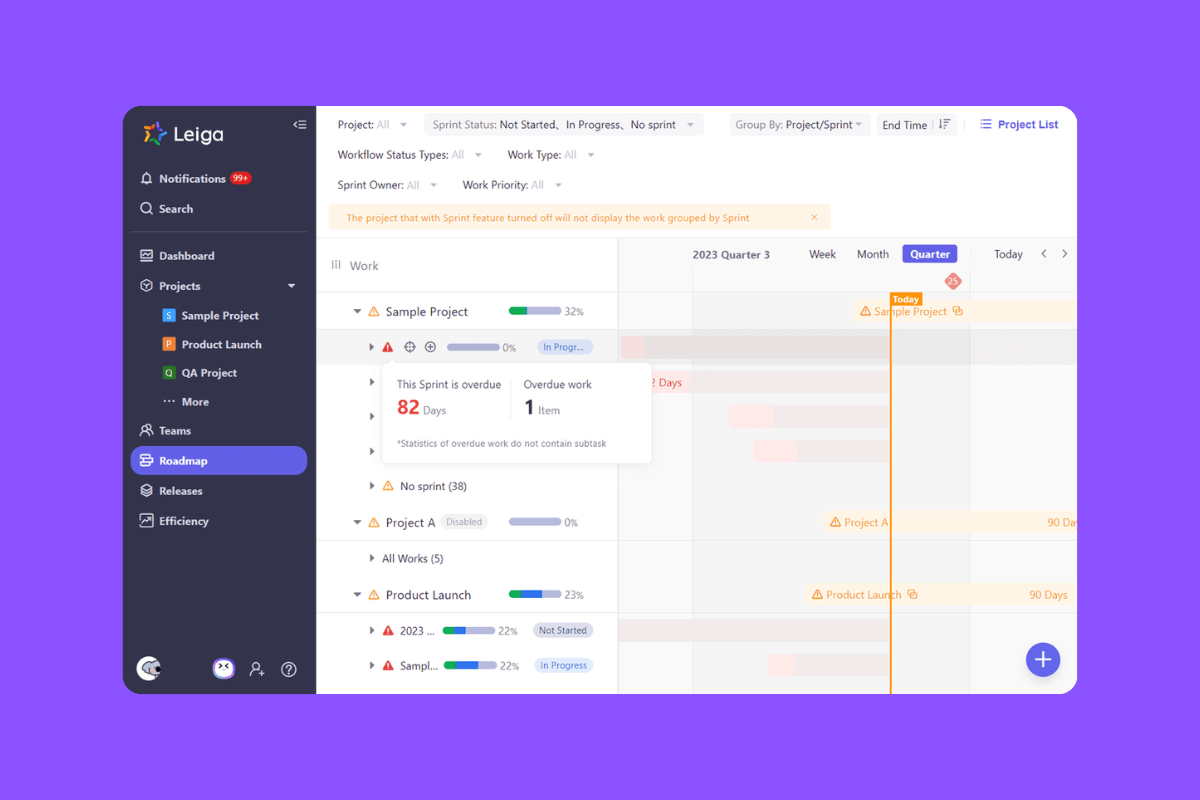
2. A Single, Real-Time View of Work
Instead of juggling multiple tools, teams need one source of truth.
A unified view of:
- Roadmaps
- Timelines
- Dependencies
- Progress
This allows project managers to make decisions quickly and confidently.
3. Smart Workload Balancing
Overloaded teams burn out. Underutilized teams waste potential.
Modern tools can distribute work based on:
- Capacity
- Availability
- Skill sets
This keeps productivity high and morale intact.
4. Developer-Centered Workflows
Developers lose focus when they constantly switch tools. Showing tasks directly inside IDEs and reducing manual updates allows developers to stay in flow and focus on building.
Read More: The Hidden Costs of Context Switching for Dev Teams
5. Continuous Benchmarking
Comparing performance against internal trends and industry benchmarks helps teams:
- Spot inefficiencies early
- Adjust processes proactively
- Stay competitive
Why Leiga Fits This Model
Leiga brings all of these elements together in one AI-driven platform. It offers:
- Real-time visibility across projects
- AI-powered requirement generation
- Smart workload distribution
- Developer-friendly task visibility
- Continuous performance insights
Unlike spreadsheets or rigid legacy tools, Leiga adapts to how modern teams actually work.
Key Metrics That Matter for Productivity
To measure and streamline productivity, certain key productivity metrics come into play. Each of these parameters targets and enhances different aspects of your team's efficiency. Let's delve deeper into each of these.
1. Daily Work Processing Efficiency
A pivotal metric, it provides insights into how productive your team is on an average workday.
A common formula is:
Efficiency = Throughput ÷ Cycle Time
It helps teams identify whether they’re moving faster, or just staying busy. Understanding this metric empowers you to make swift and informed decisions, leading to increased productivity.
2. Delivery Cycle Distribution
This handy tool makes it simple to track the amount of time each task consumes from start to finish. Represented in the form of a Lead Time distribution graph, you get a panoramic view of the timelines for various work types, thereby allowing you to adapt and enhance the processes where needed.
3. Average Time In Status
As the name suggests, this metric reveals the average time a piece of work stays in progress each day. It provides insight into the efficiency of your team's task management. By monitoring this, you can streamline task allocation and ensure a balanced workload within the team.
4. Work Distribution
Gaining clarity on how your tasks are distributed over a selected period can contribute notably towards optimizing your team's efficiency. Understanding this metric can assist you in evenly distributing tasks and ensuring that no individual is overworked or underutilized.
5. Work Trend
Arguably one of the most important metrics, Work Trend, provides you with data on the time spent on each task at the different stages of work. Recognizing the bottlenecks or delays in your work process will allow you to take effective steps toward resolution.
These metrics meaningfully construct a clear and effective guideline for enhancing team productivity. By applying these metrics, you can identify areas that require improvement, resulting in a more efficient and productive work environment. Remember, consistent monitoring and enhancements can lead to significant growth in productivity over time.
Read More: How AI Improves Developer Productivity at Scale
How to Boost Your Productivity
In today's competitive business environment, improving productivity has become a key focus for many companies. Various strategies can help achieve this objective. Here are a few tried and tested ways:
1. Better Time Management
Clear goals and realistic schedules reduce chaos.
Encourage teams to:
- Break work into smaller tasks
- Prioritize based on importance and urgency
- Avoid constant multitasking
Frameworks like the Eisenhower Matrix help teams focus on what truly matters.
2. Continuous Learning
Skills become outdated quickly. Regular training, workshops, and cross-functional learning:
- Improve adaptability
- Reduce dependency on individuals
- Strengthen collaboration
3. Recognition and Feedback
People perform better when their work is seen and valued. Recognition doesn’t need to be expensive:
- Public appreciation
- Constructive feedback
- Small rewards
These go a long way in sustaining motivation.
4. Use Technology Intentionally
Automation and AI should remove busywork, not add complexity.
The right tools:
- Reduce manual effort
- Improve communication
- Surface insights automatically
This frees teams to focus on creative and high-impact work.
Read More: Smart Automations That Save Hours for PMs, Developers, and Team Leads
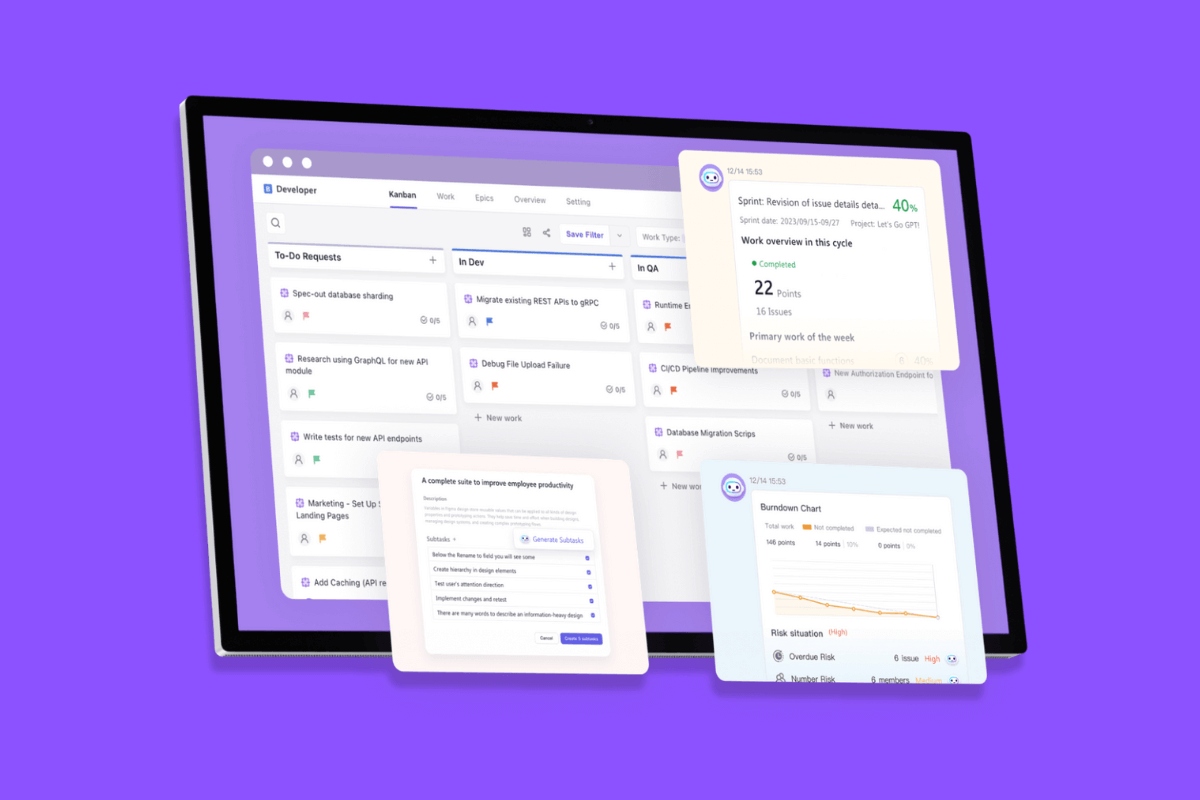
After focusing on various productivity-boosting strategies, it is essential to mention that Leiga, an AI-driven project management tool, can be a game-changer for your organization. It streamlines collaboration, offers unparalleled insights, and assists teams in working smarter, not harder.
This state-of-the-art platform eliminates the need for manual processes, allowing your team to put their energy and creativity into innovation and execution. Embrace the technology of the future for agile project management and elevate your productivity to new heights. It is time to move your projects to the next level.
Key Takeaways
Understanding and improving productivity plays a pivotal role in any organization's success. Notably, it involves efficient management, optimization, and well-planned strategies. Let’s summarize some key points that have been discussed:
The importance of calculating productivity cannot be understated. It directly correlates to the performance and output of the organization and areas requiring amendments. Computation allows for a holistic view of workflow management, thus enabling teams to identify, address, and mitigate sluggish areas effectively.
Moving into assessing productivity, several methods are at our disposal. This encompasses traditional tools like Partial Factor Productivity and Multifactor Productivity methods, Key Performance Indicators, the Value-Added approach, the Econometric method, and Machine Learning-based productivity prediction models. These approaches allow for comprehensive, precise, and multi-layered productivity evaluations.
Technology has transformed the project management landscape, and a more streamlined, efficient tool has become critical. Key features of modern project management tools, such as the delivery of product requirements swiftly, consolidated project timelines view, optimized workload distribution, reduced time spent on updating projects, and continual comparison with industry benchmarks, have proven to be transformative.
In terms of metrics, productivity involves daily work processing efficiency, delivery cycle distribution, average time in status, work distribution, and work trends. These metrics are the groundwork for enhancing team productivity, and consistent monitoring leads to significant growth in productivity over time.
There are a few tried and tested ways to boost productivity, among which are efficient time management, continuous learning, employee incentives, and leveraging progressive technologies. To truly maximize productivity, a comprehensive project management tool is needed, one that streamlines collaboration, offers real-time insights, eliminates manual processes, and pushes forward creativity and innovation.
So, just remember, optimizing productivity isn't necessarily about working harder, but smarter. Enjoy the continuous journey of improvement and take your projects to the next level. Sign up for Leiga for free to optimize your productivity most efficiently!
- Streamline Your Workflow with Leiga
- Effortlessly automate tasks
- Boost productivity with AI insights
- Free forever — elevate project management
